
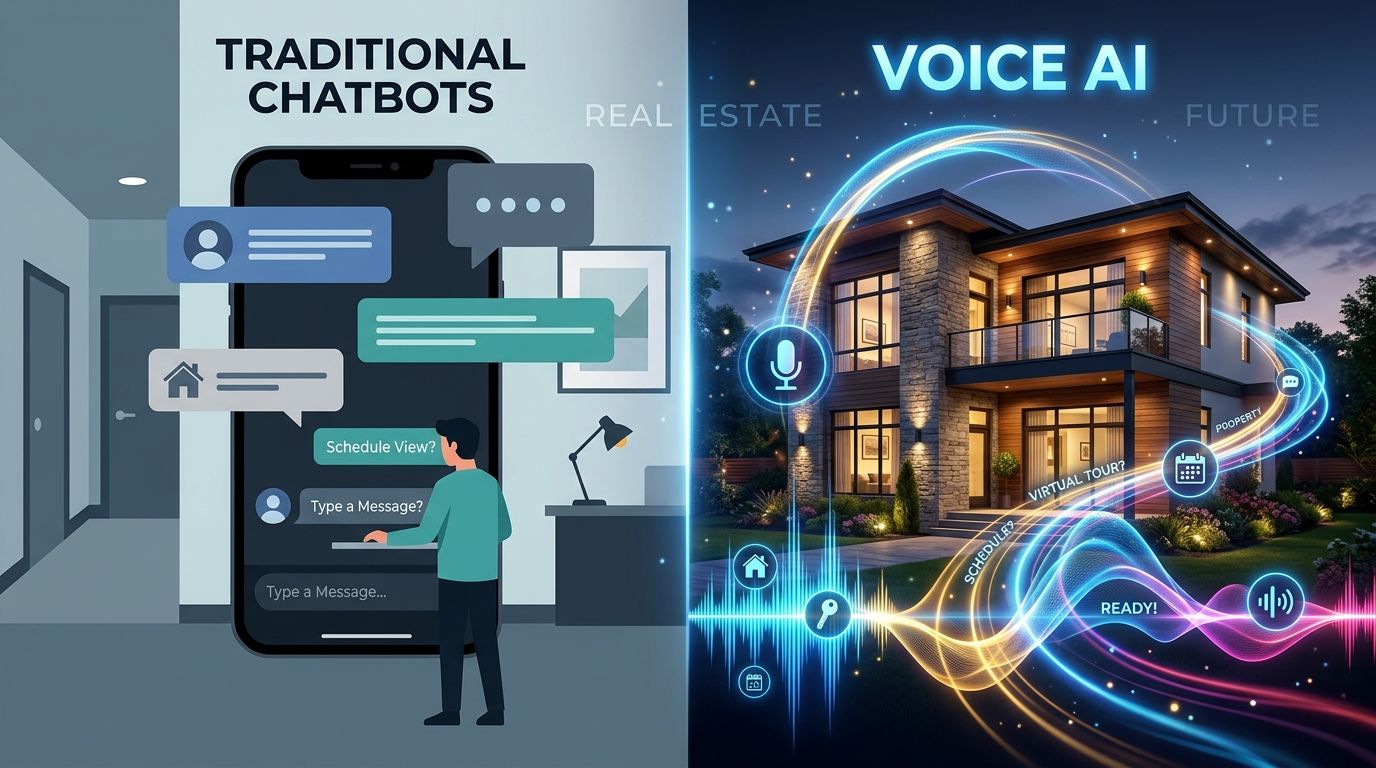
TL;DR: When comparing Voice AI vs text chatbots, Voice AI offers deeper emotional connection and better objection handling, making it superior for qualifying high-intent buyers, while text bots excel at low-friction, top-of-funnel engagement.
The Evolution of Real Estate AI
A few years ago, putting a text chatbot on a real estate website was considered cutting-edge. Today, the conversation has shifted toward Voice AI. As agents look to automate their entire funnel—from lead capture on Meta ads to booking appointments—the debate centers around which medium performs best: Voice AI vs text chatbots.
Both have a place in a modern real estate tech stack, but they serve very different psychological purposes in the buyer's journey. According to McKinsey research on AI adoption, companies that utilize omnichannel AI strategies (mixing voice and text) see the highest customer satisfaction rates.
Text Chatbots: The Low-Friction Net
Text chatbots, whether on a website or via SMS, are excellent for low-friction engagement. When a user is casually browsing listings at 2 AM, they might not want to speak to anyone. A chatbot can quickly answer questions about square footage, HOA fees, or school districts without requiring the user to commit to a phone call.
However, text has limitations. It is difficult to read emotion, urgency, or hesitation through a text message. Furthermore, if a lead drops off mid-text conversation, it's hard to know why.
Voice AI: The Qualification Powerhouse
Voice AI operates on a completely different level. When an AI Voice Agent calls a lead within 5 minutes of a form submission (see The ROI of Instant Lead Response), it simulates a human-to-human interaction. Voice carries inflection, empathy, and authority.
More importantly, Voice AI can handle complex objections in real-time. If a prospect says, "I'm worried about interest rates," the AI can dynamically pivot to discuss buydown options or connect them with a preferred lender. Voice AI builds the trust necessary to actually book an in-person appointment. This is exactly why teams are upgrading; read more in Why Top Producers Are Replacing ISAs with Voice AI.
| Feature | Voice AI | Text Chatbots |
|---|---|---|
| Communication Medium | Spoken, real-time voice | Written, SMS or web chat |
| Lead Intent Focus | High-intent qualification & closing | Low-friction, top-of-funnel engagement |
| Objection Handling | Dynamic, empathetic, real-time pivots | Limited to pre-programmed text flows |
| Emotional Connection | High (builds trust quickly) | Low (transactional) |
Frequently Asked Questions
What is the difference between Voice AI and Text Chatbots?
Voice AI handles spoken, real-time phone conversations with leads, while text chatbots interact via SMS or website chat widgets using written text.
Which converts real estate leads better, voice or text?
Voice AI generally yields higher quality conversions because voice interactions build more trust and allow the AI to handle complex objections in real-time.
Can Voice AI handle different accents?
Yes, modern Voice AI models are trained on diverse datasets and can understand and converse fluidly across various regional accents and dialects.
Should I use both Voice AI and SMS bots?
Absolutely. An omnichannel approach—where Voice AI calls the lead instantly and an SMS bot follows up if they don't answer—provides the highest overall contact rate.
Are text chatbots still relevant in real estate?
Yes. Text chatbots are excellent for initial website engagement and quick informational queries, though Voice AI is superior for deep qualification.
Ready to upgrade your lead qualification?
See the difference a conversational AI agent can make. Book a personalized demo today.
Book a Demo